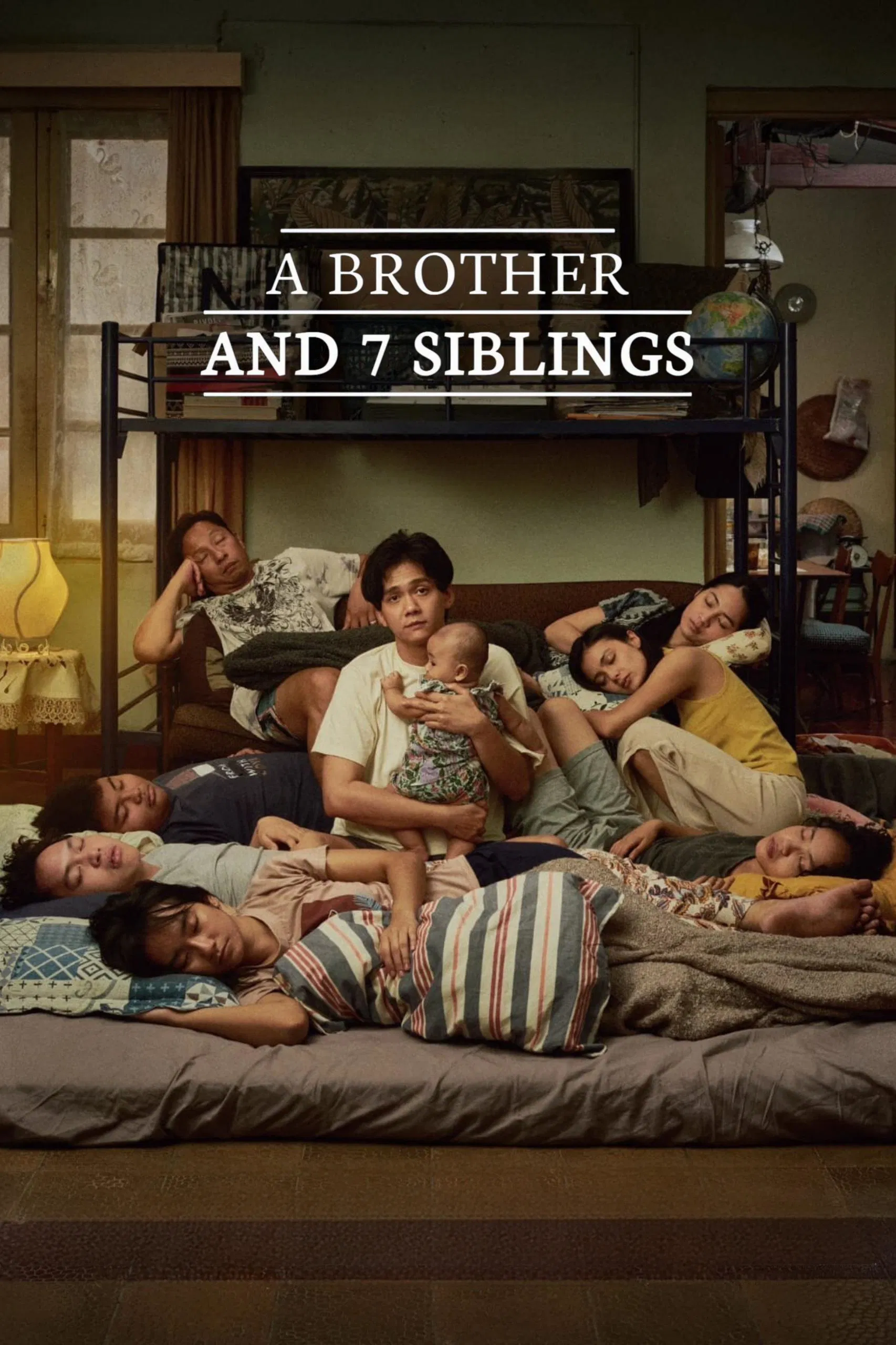
Yandy Laurens’ “A Brother and 7 Siblings” (Original title: 1 Kakak 7 Ponakan, 2025) is a warm, emotionally generous family drama that understands the power of simplicity. Adapted from Arswendo Atmowiloto’s beloved 1996 soap opera “A Sister and 7 Siblings,” the film reinterprets its roots with cinematic sensitivity. What unfolds is not just a story, but a quiet, heartfelt reflection on responsibility, love, and the often-misunderstood meaning of family.
At its core, the film follows Moko, a young man who has just completed college and is filled with dreams of a brighter future. Life, however, intervenes cruelly, forcing him to sacrifice his ambitions to take care of his seven nieces and nephews. The narrative never feels artificial or forced; instead, it evolves naturally, showing how life reshapes dreams rather than outright destroying them. This simplicity is precisely what makes the story so powerful and relatable.
One of the film’s most touching strengths is its portrayal of the children. They are never framed as burdens. Maurin articulates this beautifully—agreeing that caring for them is essential, but also insisting that everyone must contribute to the family in ways that are safe and fair. This perspective grounds the film emotionally and morally, reinforcing the idea that family is built on shared effort rather than silent suffering.
Chicco Kurniawan delivers a deeply affecting performance as Moko, portraying an ever-smiling man who is quietly crumbling under emotional and financial pressure. His restrained acting anchors the film’s glossy framework to something raw and textured. Amanda Rawles, as Maurin, brings balance and emotional clarity, and the chemistry between the two is undeniable. Their connection provides warmth and stability, essentially carrying the film through its most dramatic moments.
Beyond its surface-level warmth, the film carries an interesting underlying commentary on generational masculinity. Many of the men from the previous generation—fathers and authority figures—are portrayed as absent, ineffective, or even dangerous. Characters like Eka, the piano teacher, subtly reinforce this theme. In contrast, Moko represents a new kind of masculinity rooted in care, emotional labor, and responsibility.
Dimas Bagus Triatma Yoga’s cinematography is undeniably beautiful and cinematic, though occasionally excessive in its use of close-ups. Still, it shines in ensemble moments, capturing intimacy and togetherness. Hendra Adhi Susanto’s editing maintains a steady mid-tempo rhythm, even if the film could benefit from a tighter runtime. The music is calm and soothing, enhancing the emotional weight of the story and making the second half—where the melodrama peaks—particularly tear-inducing.
Borderline melodramatic yet deeply sincere, “A Brother and 7 Siblings” feels like a warm conversation with the audience. It gently reminds us of the true meaning of family—something many people tend to misinterpret. While the crowd-pleasing elements and extended runtime slightly dilute its impact, the film remains one of the most emotionally resonant family dramas in recent years. Simple, heartfelt, and quietly powerful, it is a film that comforts as much as it moves.