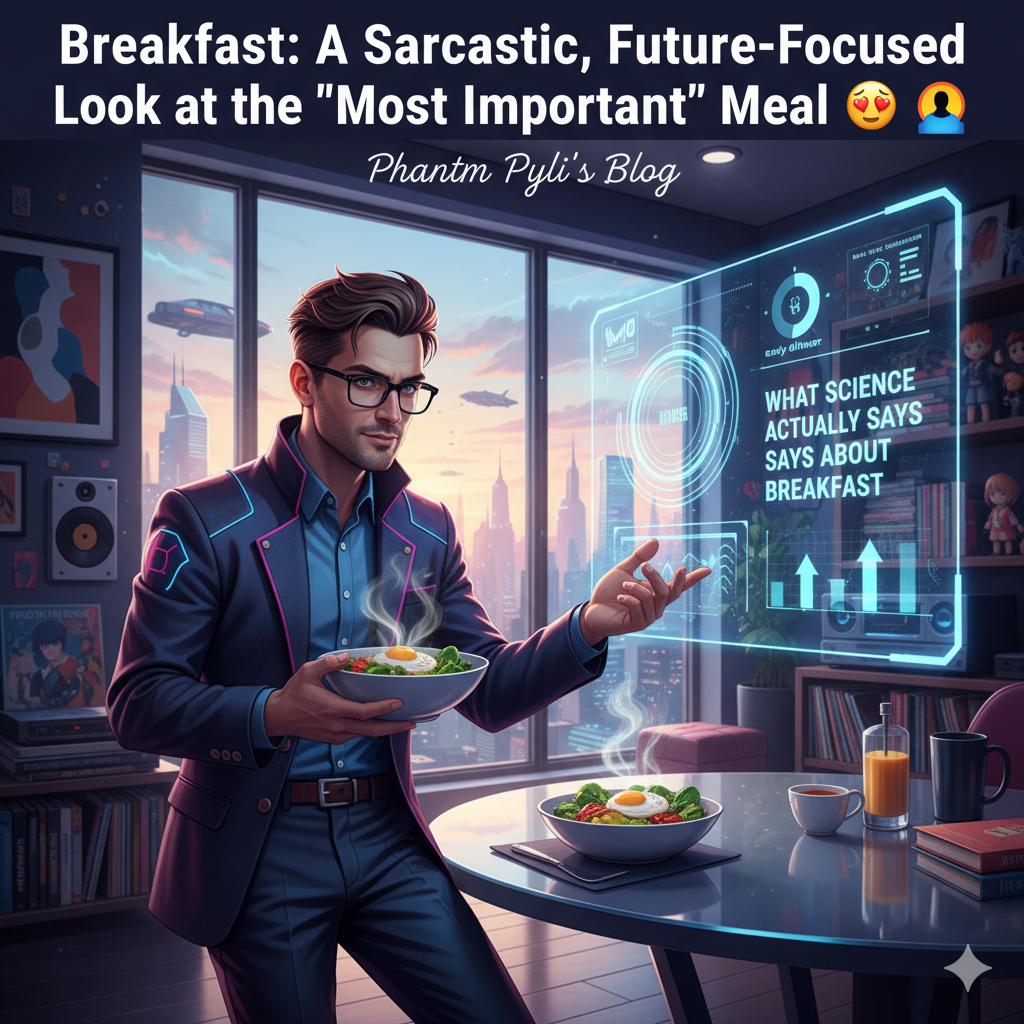
They say breakfast is the most important meal of the day. Honestly, that slogan sounds like something a 1950s ad executive cooked up to sell more cereal. We're past that, aren't we? As a researcher and philosopher, I'm here to tell you that the modern science on this beloved morning ritual is far more nuanced, interesting, and frankly, a bit of a slap in the face to conventional wisdom.
The legacy of the "breakfast mantra" is a solid one, but it’s time to build a new one based on facts, not old habits. Let's delve into what the future of nutrition actually looks like—it’s about timing, consistency, and a little bit of self-aware selfishness.
Forget simply counting calories; that's an analog approach in a digital world. Modern research reveals that the timing of our meals is as crucial as the meal itself. Our body operates on a circadian rhythm—a biological clock that makes us better at metabolizing food earlier in the day. It’s almost as if your metabolism is a cheerful morning person, which, as a night owl, I find deeply irritating.
To really make a mark on your health and future, you need to work with your body’s rhythm, not against it:
The Power of the Fast: We need a longer fasting period—think 16 hours—to rest and repair. Just like my own drive to learn and build requires downtime, your internal systems need a clear break. Morning Superiority: Your metabolism is simply higher earlier in the day. Your best blood sugar control window? Around 10 am to noon. Consistency for the Win: Your body loves routine. Eating at consistent times makes your internal systems function with the efficiency I demand in my own research.
Get this: consuming the exact same food, like a bowl of ice cream (don't judge my research methods), in the evening versus the morning, results in a significantly higher blood sugar spike at night. Why? When it gets dark, your body releases melatonin, which actively suppresses your ability to manage blood sugar. Your body is practically yelling, "Stop eating, it's bedtime!"
This is the finding I truly appreciate because it throws the "breakfast guilt" right out the window. The negative health effects often tied to skipping the morning meal—things like higher risks of obesity and heart trouble—aren’t caused by skipping breakfast itself.
A study reveals a critical truth:
People who skipped breakfast AND ate dinner late had a much higher risk of these issues. People who skipped breakfast but ate dinner at a normal time were largely spared this increased risk.
See? It's not about the sacred start to the day; it's about the unnecessarily late end. The problem isn't the early fast; it's stretching your eating window too far into the evening. Be selfish and care for your long-term cardiovascular health by anchoring your eating window with an early dinner.
If you are going to build a foundational, first-of-the-day meal—a solid, future-proof starting point—make it count. Forget the high-sugar, low-impact garbage.
The secret to a breakfast that actually keeps you full and focused? Protein.
A protein-rich start is pure efficiency. It provides improved appetite control, making you less likely to cave to mindless cravings later. It’s modern science supporting an ancient, sensible adage: "Breakfast like a king and dine like a pauper." That’s the kind of strategic, self-serving advice I can get behind.
The old, simple rule is dead. Good riddance.
What the science actually offers us is not one rule, but a powerful set of tools based on historical knowledge (our natural body clock) and cutting-edge facts.
Whether you strategically skip breakfast for a longer fast (Intermittent Fasting) or you "breakfast like a king" for maximum satiety and early-day metabolism, the most important thing is to be intentional. Pay attention to your body’s clock, your goals, and, critically, the timing of your last meal.
Your health is your most important legacy. Use this knowledge to build it. Now, if you’ll excuse me, I’m going to put on some new electronic music and ponder how to leverage this metabolic data for something truly futuristic. The new generation deserves to know the facts.